
Understanding Severe Vision Loss: (Legally Blind Explained)
20/400 vision is not “very blurry.”
It is functionally blind in most classroom situations.
This acuity changes how a student sees the board, moves through hallways, and reads any printed material.
Here is what 20/400 looks like in real life:
1. The board disappears at distance
At 20/400, the board becomes a hazy shape.
Letters vanish instantly.
Contrast does not help.
Even bold markers fade into one blended patch of color.
2. Faces become silhouettes
Facial expressions blur into outlines.
Students miss smiles, frowns, eyebrow lifts, and social cues that guide group interaction.
This affects friendships and classroom communication.
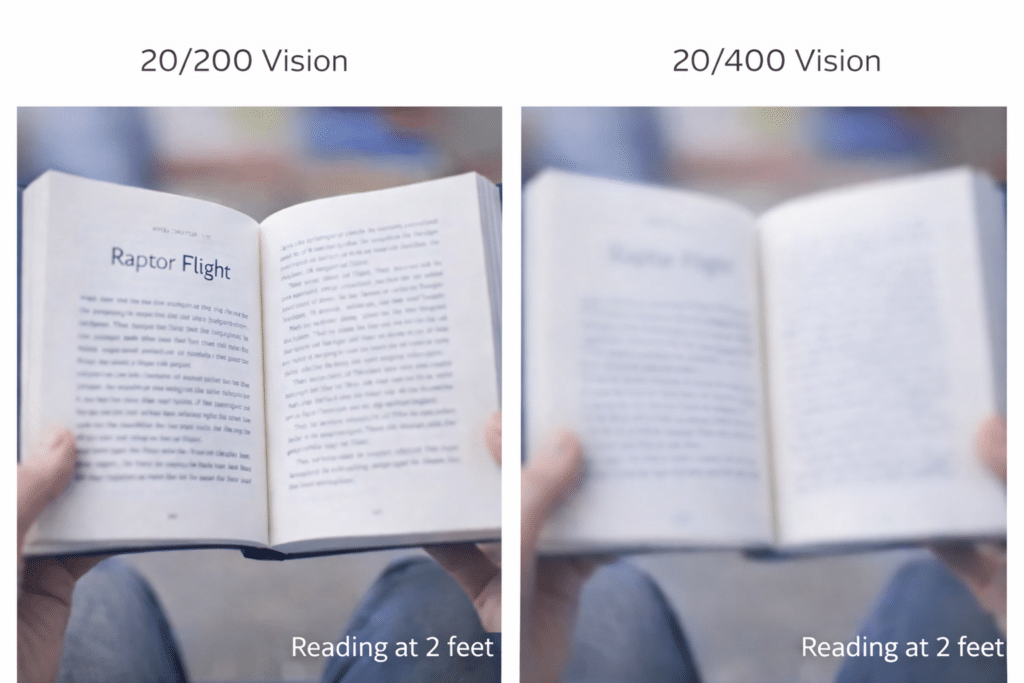
3. Reading moves inches from the face
To see print, students move the page to within 3–5 inches with 28-42 enlarged font.
This causes neck strain, fatigue, and slower reading.
Large print may not help.
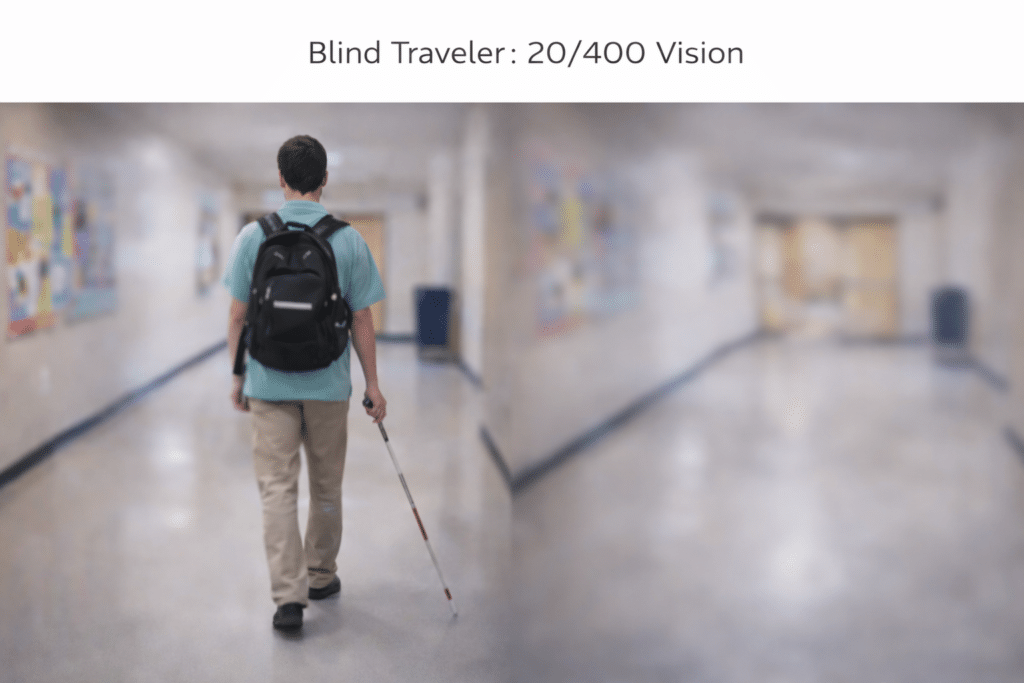
4. Orientation and mobility require skill
Hallways blur.
Floor changes disappear.
Open doors look like walls.
Students with 20/400 need strong cane skills and consistent practice with routes.
5. Fatigue arrives quickly
The visual system works nonstop.
This leads to exhaustion long before frustration shows up.
Behavior that looks like “avoidance” is often fatigue.
6. 20/400 can fluctuate toward 20/200
Vision varies during the day.
Fatigue, lighting, and glare make acuity worse.
A student measuring 20/400 in the morning may function closer to 20/200 by afternoon or vice versa.
On a Snellen chart, missing just one or two letters can shift a child from 20/200 to 20/400.
This is why seating, lighting, contrast, and consistent access tools matter.
20/400 is not a measure of intelligence
It is a measure of access.
With the right tools, students with 20/400 vision:
- read using laptops and screen readers
- work independently with braille, braille displays and tactile graphics
- navigate confidently with cane and GPS
- complete assignments alongside their peers using access technology
If instruction begins early and stays consistent, they thrive.
Understanding Vision in Children: What Visual Acuity Really Means
Signs of Low Vision in Children Even when they Pass Screening
What 20/40 Vision Means and Why “Almost Normal” Still Matters
20/70 Vision Explained: What It Really Means and How It Affects Daily Life
What does 20/100 vision look like?
20/200 Vision Explained: What Everyone Gets Wrong About “Legal Blindness”
What Does 20/400 Vision Look Like?
What does 20/800 vision look like?
When Vision Problems Look Like Misbehavior: What Parents and Teachers Miss