Key Statistics on Blindness and Vision Loss
Overall Vision Loss
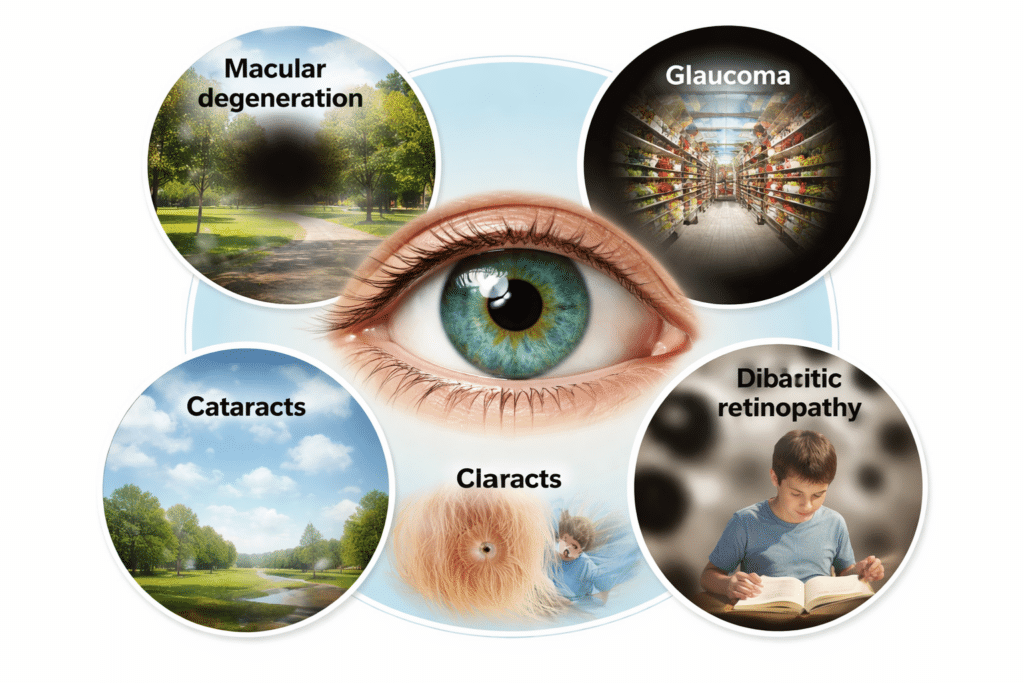
- More than 12 million Americans live with blindness or significant vision impairment, and it’s important to understand how different eye conditions affect the way people see, as each one can have unique effects on vision.
- Globally, 2.2 billion people have vision impairment or blindness.
Age-Related Increase
Vision loss rises sharply with age because the risk of major eye diseases grows over time.
- After age 40, one in eight adults develops a vision-threatening eye condition.
- After age 65, the rate of blindness and low vision increases four-fold.
- Adults over 75 experience the highest rates of blindness in the population.
- Nearly half of all blindness occurs in people over 70.
Leading Causes of Vision Loss as We Age
How Different Eye Conditions Affect the Way People See as These Conditions Become More Common with Age
- Cataracts
- Affects 24 million Americans over 40.
- By age 80, more than half of adults develop cataracts.
- Glaucoma
- Over 3 million Americans have glaucoma.
- Risk doubles every 10 years after age 40.
- Age-Related Macular Degeneration (AMD)
- Leading cause of blindness in older adults.
- Affects 11 million Americans, expected to reach 22 million by 2050.
- Diabetic Retinopathy
- Affects one in three adults with diabetes.
- Risk increases with both age and length of diabetes.
Why Eye Conditions Worsen With Age
Here are the major age-related changes:
- The lens becomes cloudy, causing blurred or dim vision.
- The retina loses cells, reducing clarity and contrast sensitivity.
- The optic nerve can suffer pressure-related damage.
- Blood vessels weaken, especially with diabetes and hypertension.
Impact on Daily Life
- Older adults with low vision face three times the fall risk.
- Vision loss increases depression risk by up to 25 percent.
- Two-thirds of adults in assisted-living communities have untreated vision issues.
Hopeful Note
Most age-related eye diseases are treatable or manageable with early detection. Screen reader technology, braille displays, and accessible tools also help older adults stay independent.
How Different Eye Conditions Affect What We See
Most people assume vision loss is like “blurry vision” — but every eye condition affects sight in a completely different way. Understanding these differences helps teachers, families, and coworkers support students and adults with confidence and empathy.
This guide breaks down the most common eye conditions and gives you a simple, accurate explanation of how the world looks through their eyes.
1. Cataracts

What it is: Clouding of the eye’s natural lens.
You See:
- Vision appears foggy, milky, or like looking through dirty glass
- Colors look faded
- Light glare is intense (especially headlights at night)
What helps: Even lighting; high contrast; reducing glare. sun glasses help stop glare of cataracts. Removal is important to regain full vision.
2. Macular Degeneration (AMD)

What it is: Damage to the macula, the part of the retina responsible for central vision.
You See:
- A dark or blurry spot in the center
- Faces and print disappear
- Side vision stays clear
What helps: Large print, audio access, magnification, and teaching scanning strategies. Teaching to focus on the outside of vision. Prism glasses the will help bring vision to the center again
3. Stargardt Disease
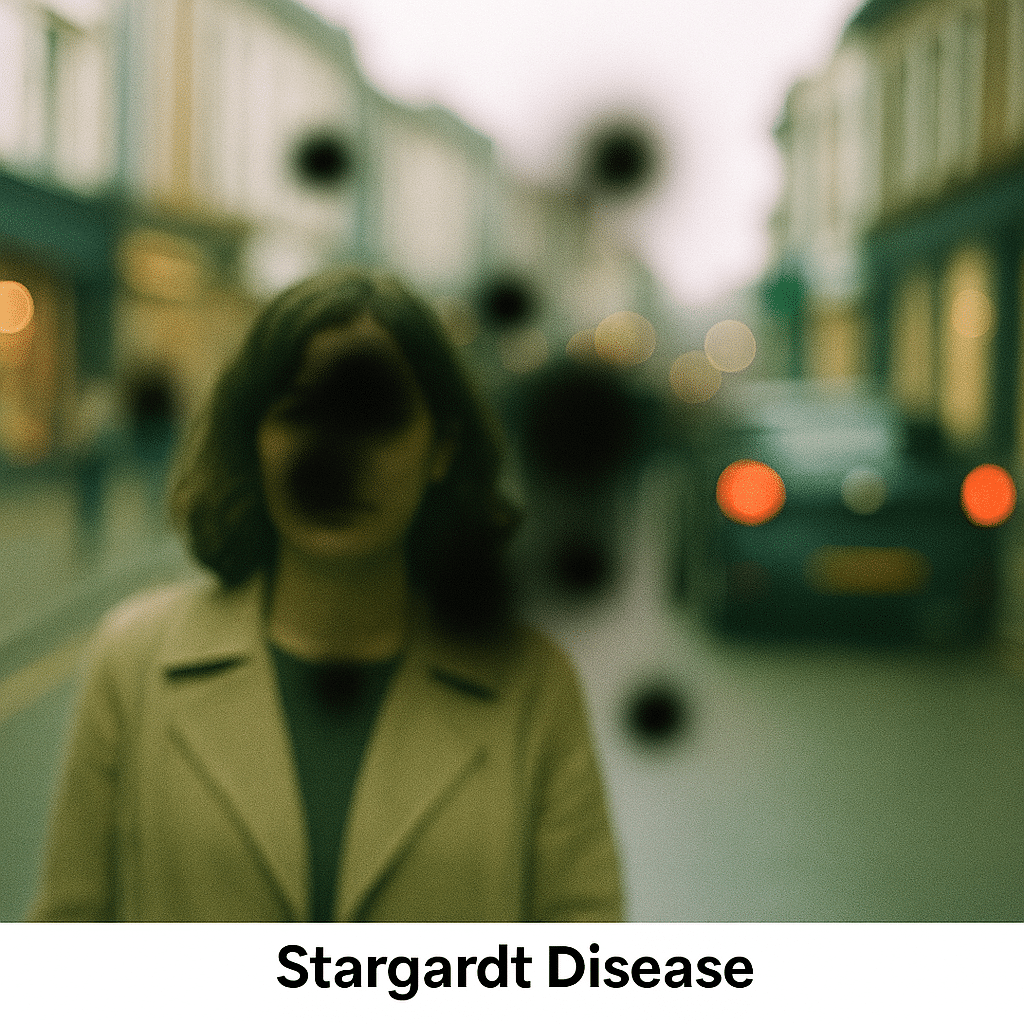
What it is: A juvenile form of macular degeneration.
You see:
- Central blind spots
- Difficulty recognizing faces
- Trouble reading standard print
- Good peripheral vision
What helps: High‑contrast materials, audio, and flexible access to digital text. Prism glasses
4. Glaucoma

What it is: Damage to the optic nerve, often from high eye pressure.
You see:
- Loss of peripheral (side) vision and central vision
- “Tunnel vision” in later stages
- Difficulty navigating crowded spaces
What helps: Clear pathways, orientation & mobility support, and strong lighting. Treatment is so essentially crucial to slow or stop progression of disease
5. Diabetic Retinopathy
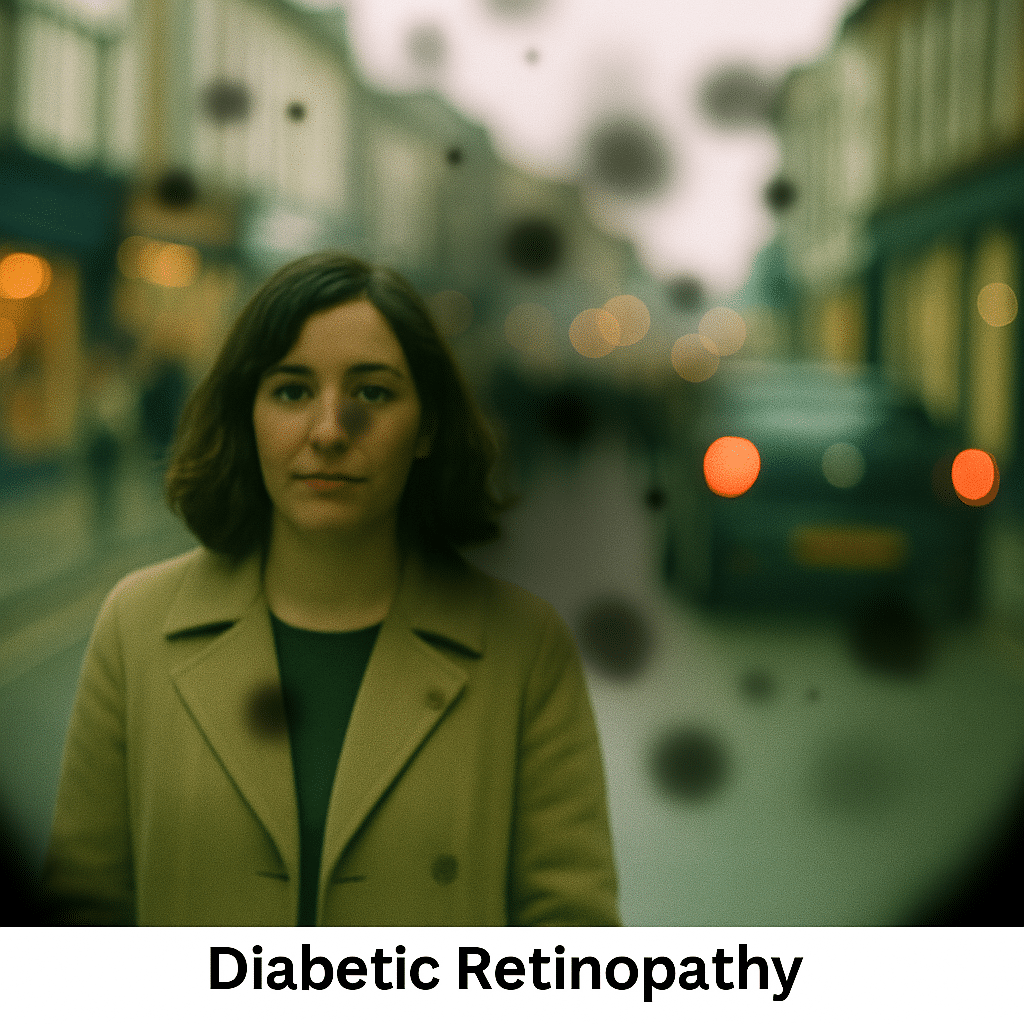
What it is: Damage to retinal blood vessels from diabetes.
You see:
- Floaters (dark spots that move) and grow larger
- Patchy or fluctuating vision
- Blurry or distorted areas
- Vision may change day‑to‑day
What helps: Flexible accommodations, audio tools, and predictable layouts.
Keep blood sugar between 80–150 mg/dL, and maintain an A1C below 7.0. These levels help prevent the widespread damage diabetes can cause throughout the body. Diabetes damages the body’s small blood vessels first, so the eyes, kidneys, feet, and fingers often show problems early. When blood flow weakens, nerves and tissues become painful and begin to die.
6. Achromatopsia (Total Color Blindness)
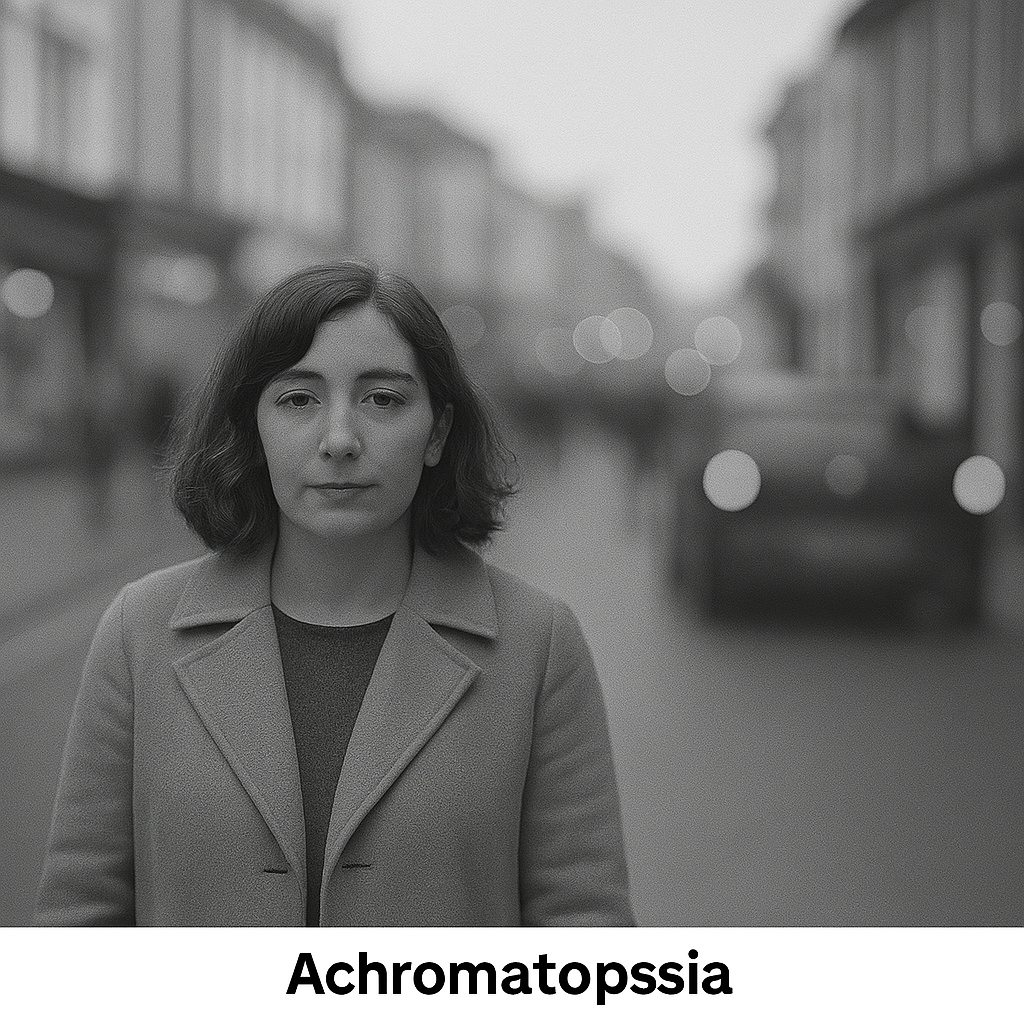
What it is: A rare condition affecting cones in the retina.
You see:
- The world appears in shades of gray
- Extreme light sensitivity
- Reduced clarity
What helps: Low‑vision sunglasses, tinted filters, wearing a hat outside and dimmed environments.
7. Corneal Diseases

What it is: Damage or irregularity of the cornea.
You see:
- Vision appears distorted, wavy, blurred edges or double
- Glare and halos around lights
- Difficulty with fine detail
What helps: Contrast, reduced glare, and alternative access to print.
Why This Matters
Understanding how people see with different eye conditions reveals why global vision loss continues to rise.
There are hundreds of known eye conditions, from common refractive issues to rare disorders that slowly damage sight.
The World Health Organization notes at least fifteen major conditions that affect vision, with many others harming eye health silently.
More than thirty-three million people are blind from preventable causes today.
Over one billion people live with treatable or preventable vision loss but lack access to essential care.
There are hundreds of recognized eye conditions globally, ranging from common refractive errors to rare genetic disorders. The World Health Organization highlights at least 15 major conditions that impact vision, but many more affect eye health without causing vision loss.
Understanding Vision in Children: What Visual Acuity Really Means
Signs of Low Vision in Children Even when they Pass Screening
What 20/40 Vision Means and Why “Almost Normal” Still Matters
20/70 Vision Explained: What It Really Means and How It Affects Daily Life
What does 20/100 vision look like?
20/200 Vision Explained: What Everyone Gets Wrong About “Legal Blindness”
What Does 20/400 Vision Look Like?
What does 20/800 vision look like?
When Vision Problems Look Like Misbehavior: What Parents and Teachers Miss