
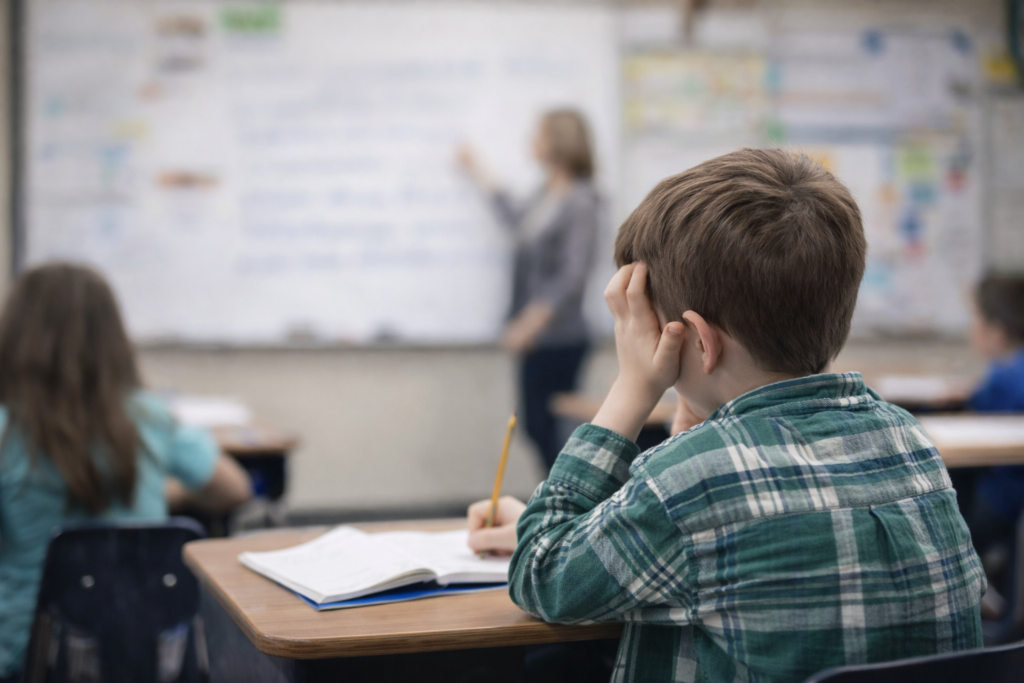
Many children pass school vision screenings but still struggle to see clearly. Screenings check distance blur, not functional vision. Parents and teachers should watch closely for signs of low vision in children, because children may look fine on paper, yet daily tasks reveal hidden challenges. They squint at the board, lose place in text, miss expressions, and tire quickly. These behaviors reflect low vision, not lack of effort.
Many children pass school vision screenings but still struggle to see clearly. Screenings check distance blur, not functional vision. Children may look fine on paper, yet daily tasks reveal hidden challenges. They squint at the board, lose place in text, miss expressions, and tire quickly. These behaviors reflect low vision, not lack of effort.
Short Attention Span Optimized
1. They squint at the board even from the front row
Squinting signals effort, not attitude. The student works harder to sharpen distant detail.
Strategy: Increase contrast, use bold markers, and provide digital access. Squinting means they’re working hard, not misbehaving.
2. They move reading material close to their face
Children may hold books only inches away. They are trying to capture clarity, not misbehaving.
Strategy: Allow close viewing without correction. Offer magnification, larger print, or digital zoom. This is a strategy, not a problem.
3. They lose place or skip lines while reading
Low contrast and visual strain make tracking difficult. This shows visual fatigue, not poor skills.
Strategy: Use line guides, high‑contrast text, and uncluttered layouts. Tracking improves when visual strain decreases. Use immersive reader on laptop in WORD. Teach Screen reader to listen to content versus all visual.
4. They avoid worksheets with dense text
Heavy print strains the eyes. Students may stall, fidget, or rush because the task hurts.
Strategy: Break text into smaller chunks, increase spacing, and reduce clutter. Avoidance is often about discomfort, not motivation. Teach screen reader Access technology.
5. They miss facial expressions and social cues
Low vision reduces detail in faces. Children may misunderstand reactions, jokes, or emotions.
Strategy: Pair spoken cues with visual ones. Teach peers to use clear gestures and verbal confirmation. Low vision makes faces low‑contrast.
6. They trip or bump into objects others avoid easily
Low detail and reduced depth perception affect safe movement. These students need clear pathways.
Strategy: Keep pathways clear, reduce visual clutter, and ensure consistent classroom layouts. This is an access issue, not coordination.
7. They tire long before they complain
Visual fatigue builds fast. A child may appear distracted after lunch simply because their eyes are tired.
Strategy: Build in visual breaks, rotate tasks, and allow alternative formats. Visual fatigue shows up as “inattention.”
8. They improve dramatically with better contrast or lighting
When small changes help instantly, the issue is vision, not motivation.
Strategy: Adjust lighting, reduce glare, and use bold, high‑contrast materials. Quick improvement means the issue is vision, not effort.
Low Vision Issues
A child can pass a screening yet still experience low vision daily. These signs reflect access needs, not ability. With early support and the right tools, children learn confidently and keep pace with peers.
Understanding Vision in Children: What Visual Acuity Really Means
Signs of Low Vision in Children Even when they Pass Screening
What 20/40 Vision Means and Why “Almost Normal” Still Matters
20/70 Vision Explained: What It Really Means and How It Affects Daily Life
What does 20/100 vision look like?
20/200 Vision Explained: What Everyone Gets Wrong About “Legal Blindness”
What Does 20/400 Vision Look Like?
What does 20/800 vision look like?
When Vision Problems Look Like Misbehavior: What Parents and Teachers Miss