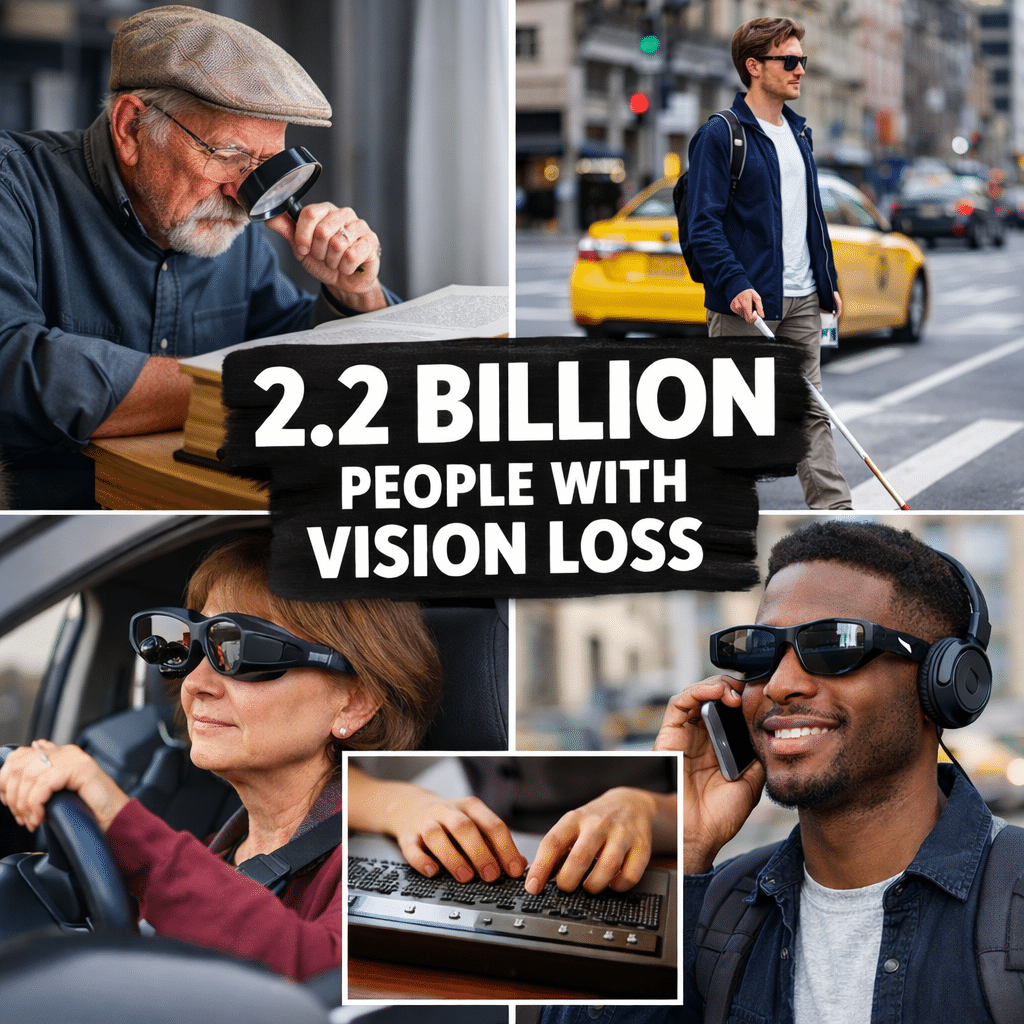
2.2 Billion People Live With Vision Impairment
Vision loss is one of the most common disabilities on earth, and it’s growing fast. If you work in healthcare, tech, education, or policy, these numbers matter for accessibility, product design, and funding.
Over 51.9 million adults in the U.S. report some level of vision difficulty. About 6–7 million Americans have significant vision loss or blindness. Globally, 2.2 billion people have vision impairment.
But those top-line numbers hide urgent trends. Here’s the breakdown with the latest 2024-2026 data, what’s driving it, and what to do about it.
Key Statistics: U.S. Vision Loss at a Glance
| Population | Estimate | Source | What It Means |
| U.S. adults with vision difficulty | 51.9+ million | CDC/NEI estimates | Includes trouble seeing even with glasses, from mild to severe |
| Significant vision loss or blindness | 6–7 million Americans | NEI/VEHSS | Legal blindness 20/200 or worse, or 20/40 or worse with correction |
| Adults 71+ with visual impairment | >25% | NHATS 2021 study | More than 1 in 4 seniors |
| Americans 40+ with eye problems | 90 million | CDC | “More than 3 in 5” adults over 40 |
| Children under 18 with vision difficulty | ~625,000 | ACS 2023 | Includes blindness and “trouble seeing even with glasses” |
Global Vision Impairment: The 2.2 Billion Number Explained
The World Health Organization estimates 2.2 billion people worldwide have near or distance vision impairment. Of those, at least 1 billion cases could have been prevented or have yet to be addressed with glasses, cataract surgery, or other treatment.
Why it’s rising:
- Aging: By 2050, U.S. cases of visual impairment/blindness are expected to double to 8+ million as baby boomers age.
- Chronic disease: Diabetic retinopathy will increase 72% by 2050. Glaucoma and AMD will double.
- Uncorrected refractive error: 16.4 million Americans are expected to have difficulty seeing due to myopia/hyperopia that glasses could fix.
What Counts as “Vision Impairment”?
Researchers use different definitions, which is why numbers vary:
- Self-reported difficulty: ACS asks “Are you blind or do you have serious trouble seeing, even when wearing glasses?” 3.6M Americans 65+ said yes in 2023.
- Measured acuity: Legal blindness = 20/200 or worse. Visual impairment = 20/40 or worse with best correction.
- Functional vision: Trouble reading newsprint or doing near work even with glasses. About 1 in 8 Americans over 50 have presenting near-vision impairment.
CDC notes: modeled estimates of “uncorrectable” vision loss differ from self-report, which includes people who lack glasses.
What you can do to Help Yourself Now
Why This Matters: Impact Beyond Eyesight
Vision loss isn’t isolated. People with vision loss are more likely to have:
- Type 2 diabetes, depression, stroke, hearing loss, chronic kidney disease
- Isolation, falls, balance problems, risk of early death
Economic cost: Vision problems will cost the U.S. $373 billion by 2050, a 157% increase.
Public perception: In polls, losing eyesight ranks as a “10 out of 10” impact on quality of life for ~50% of Americans across racial/ethnic groups.
4 Trends Driving Vision Loss in 2026
- Aging population: NHATS data shows >25% of adults 71+ have impairment. By 2029, all baby boomers will be 65+.
- Diabetes epidemic: Diabetic retinopathy cases rising 72% by 2050.
- Screen time & myopia: Uncorrected refractive error affects 8.2M Americans now and will hit 16.4M.
- Access gaps: Near-vision impairment is higher for many groups, lower income, and those without private insurance.
What Can Be Done: Prevention & Accessibility in 2026
1. Early detection works: “Early detection and intervention—possibly as simple as prescribing corrective lenses—could prevent a significant proportion of avoidable vision loss,” says NEI Director Dr. Paul Sieving.
2. CDC’s Vision Health Initiative focuses on:
- Assessing impact + at-risk populations
- Evidence-based interventions
- Increasing access to vision care
3. For tech, web, and product teams:
- 51.9M U.S. adults need larger text, high contrast, screen reader support, and voice navigation.
- WCAG 2.2 AA is now baseline. Alt text, keyboard navigation, and captions aren’t “nice to have.”
- AI tools like voice description and real-time image captioning are exploding because of this market.
4. For employers & schools:
- 1 in 8 people over 50 struggle with near vision. That means reading glasses policies, digital accessibility, and flexible print sizes are ADA issues.
Takeaways for SEO & Content Creators
If you’re writing about health, aging, tech, or accessibility, target these high-intent keywords:
- “how many people are blind in the US”
- “vision impairment statistics 2025”
- “causes of vision loss over 40”
- “ADA website requirements for vision”
- “children with vision loss statistics”
Bottom line: Vision impairment affects 2.2 billion people globally and 51.9M+ Americans. It’s not rare. With cases projected to double by 2050, design, policy, and healthcare decisions made today will determine whether that’s a crisis or a managed transition.